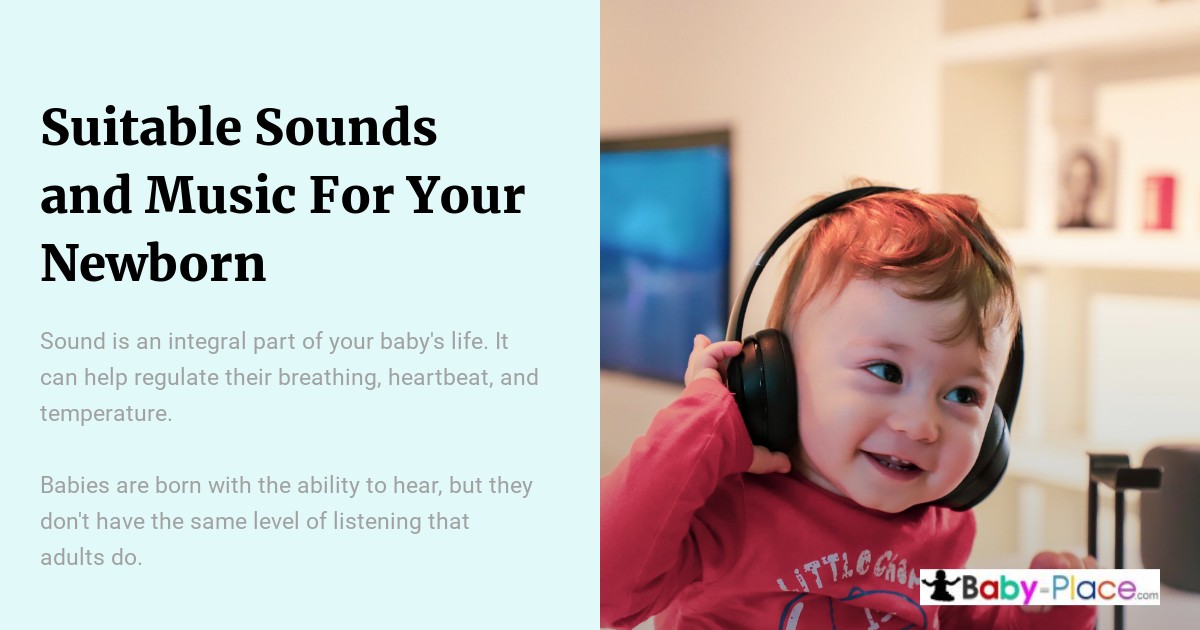
Finding Suitable Sounds and Music For Your Newborn
Sound is an integral part of your baby’s life. It can help regulate their breathing, heartbeat, and temperature.
Babies are born with the ability to hear, but they don’t have the same level of listening that adults do. Their hearing is so sensitive that it can be difficult for them to understand what they’re hearing—especially if you’re playing music or sounds that are too loud.
The sounds you choose can help soothe your baby by reducing stress and anxiety. You might notice that they calm down when they hear certain sounds or that newborns get excited when they listen to others.
Finding the right sounds for your baby is crucial because certain sounds can help them sleep better at night, giving them more energy and making them generally happier during the day.
This article will explain finding suitable sounds and music for your newborn.
What are soothing sounds for a newborn baby?
Soothing sounds for a newborn baby can include anything from your heartbeat to white noise, music, lullabies, and even nature sounds.
You can find soothing sounds and music in many different formats. It is essential to find the right ones for each baby’s needs.
If you have a favorite song that calms you down, it will likely work for your baby too! Try playing soothing music before bedtime so they’ll fall asleep more quickly when they hear it again at night.
Newborns often have trouble sleeping because they’re used to the noise of being in the womb. If this is the case with your baby, try playing with soothing sounds and observing their reaction.
If they fall asleep straight away, then that’s great! You’ve found a method that works well for both of you!
Soothing sounds are an important part of a newborn baby’s development. The sound of a baby’s own mother’s voice or the sound of a lullaby can help to calm a newborn baby and help them to relax. This can promote healthy sleeping patterns and help to soothe a baby who might be feeling anxious or overwhelmed. Soothing sounds can also help a baby to form a strong bond with the parent or caregiver, as the sound becomes familiar and comforting. Additionally, soothing sounds may help to encourage a baby to focus on something, which can help improve their cognitive development. Therefore, soothing sounds are an essential aspect of a newborn baby’s growth and development.
Soothing sounds for newborn babies are essential because they help them to relax. Babies can get stressed out by the unfamiliar, so if you have just moved house or your baby’s room is noisy, this can be very upsetting.
It may make them agitated and cry, which isn’t what we want!
Soothing sounds can help newborn infants settle down and feel more comfortable. As babies cannot communicate verbally, it is up to adults to determine what works best in each situation.
What should you look for in the soothing sound or music for your newborn?
You may have noticed that some things seem to soothe your baby, and others don’t. It is because there are different types of soothing sounds, which all have different effects on babies. For example, some babies like the rhythmic sound of white noise machines, whereas others prefer music or their parent’s voice.
Sound is one of the first ways your newborn can learn about their world, so it’s essential to provide a variety of soothing sounds. For example, you should look for a sound that is gentle and not jarring, such as the hum of a humidifier or fan, rather than a loud siren or alarm clock. It is essential to avoid anything that has words or may be a distraction (such as music with lyrics) while your baby is learning to communicate.
Experimenting with different music and sounds is essential to determine what works best for your baby. Keep in mind that soothing sounds don’t have to come from a machine or through speakers; they can also be produced by you when singing or talking.
If you’re still unsure what kind of sound your baby likes, try repeatedly playing the same soothing noise. If they stop crying after a few minutes, then it’s likely that this type of soothing sound works well for them.
It’s important to note that babies will respond differently to different sounds, so there isn’t one type of noise that works best for everyone.
Finding the proper soothing noise can be tricky, but it’s worth taking some time to experiment with different options.
You can either try recording yourself making soothing sounds or playing back a recording of a parent doing so; this way, you’ll know what kind of sound your baby likes.
You can also check out websites that offer sound libraries specifically designed for newborns. These sounds are typically calming and soothing, and you may find something that your baby responds well to. You can also use music that is specifically designed for newborns, such as lullabies and classical music.
Finally, you can use white noise machines or apps such as myNoise.net to create a calming soundscape for your baby. White noise works especially well for newborns because it blocks out other noises and helps them relax and sleep better.
How to use soothing sounds with your newborn?
You can play the recording any time for your baby, but it’s best to do so when feeding or cuddling them.
It will help them associate the calming sound with positive feelings and sensations, making it even more effective in helping relieve their stress. If you play sounds while you’re holding them close, they can feel the vibrations of your voice as well as hear it.
The first time you play the recording, it’s a good idea to let your baby listen for a few minutes before assuming they’re uninterested. It will help them get used to the sound and make it more effective in the future.
You can also try playing it when your baby is sleeping or resting; this way, they’ll associate the soothing sounds with relaxation rather than activity.
If you want to test whether or not your baby is enjoying the recording, try making eye contact with them while it’s playing. If they seem uninterested or distracted, try another approach.
One way to make the recording more effective is to play it in a quiet room. It will allow your baby to focus on the sounds rather than other distractions.
Conclusion
Playing music and soothing sounds for your newborn baby is a great way to help them get used to different sounds and make them feel more comfortable in their environment.
It can also be a fun bonding experience for the two of you, and it can help your baby get used to certain sounds that they’ll hear later in life.
Don’t give up if your baby doesn’t respond to music. Try a different type of music or wait until they’re older—when they can show more emotion and interest in what’s happening around them.
If you’re looking for new music for your baby, consider purchasing a recording designed explicitly. You’ll find plenty of options on sites like Amazon or iTunes.